What happens when a worker faces an emergency, and no one is around to help? That’s the hidden risk behind many industrial operations today. Globally, workplace accidents cause over 2.3 million deaths every year, and many incidents become more severe when employees work alone without immediate assistance.
For businesses operating in sectors like manufacturing, construction, utilities, and oil & gas, understanding lone worker safety is not just a compliance requirement; it’s critical for protecting employees, reducing liability, and ensuring rapid emergency response.
In this blog, you’ll learn about the key risks lone workers face, relevant safety regulations, and how modern technology solutions help businesses improve lone worker safety and incident response
Who Is a Lone Worker and Why Does It Matter?
A lone worker is any employee who performs tasks without direct supervision or immediate assistance. This doesn’t always mean working remotely; many lone workers operate within large industrial facilities, but in isolated zones where help may not be instantly available.
They show up across industries you rely on every day:
- Construction: Working on unmonitored sites or at height
- Manufacturing: Running night shifts solo on heavy machinery
- Utilities: Maintaining electrical infrastructure in remote areas
- Oil & Gas: Operating in hazardous, isolated field locations
- Healthcare: Field nurses or technicians visiting unpredictable environments
Now that you know who lone workers are, the next critical step is understanding the legal responsibilities businesses must follow to protect them.
Lone Worker Safety Regulations You Must Know
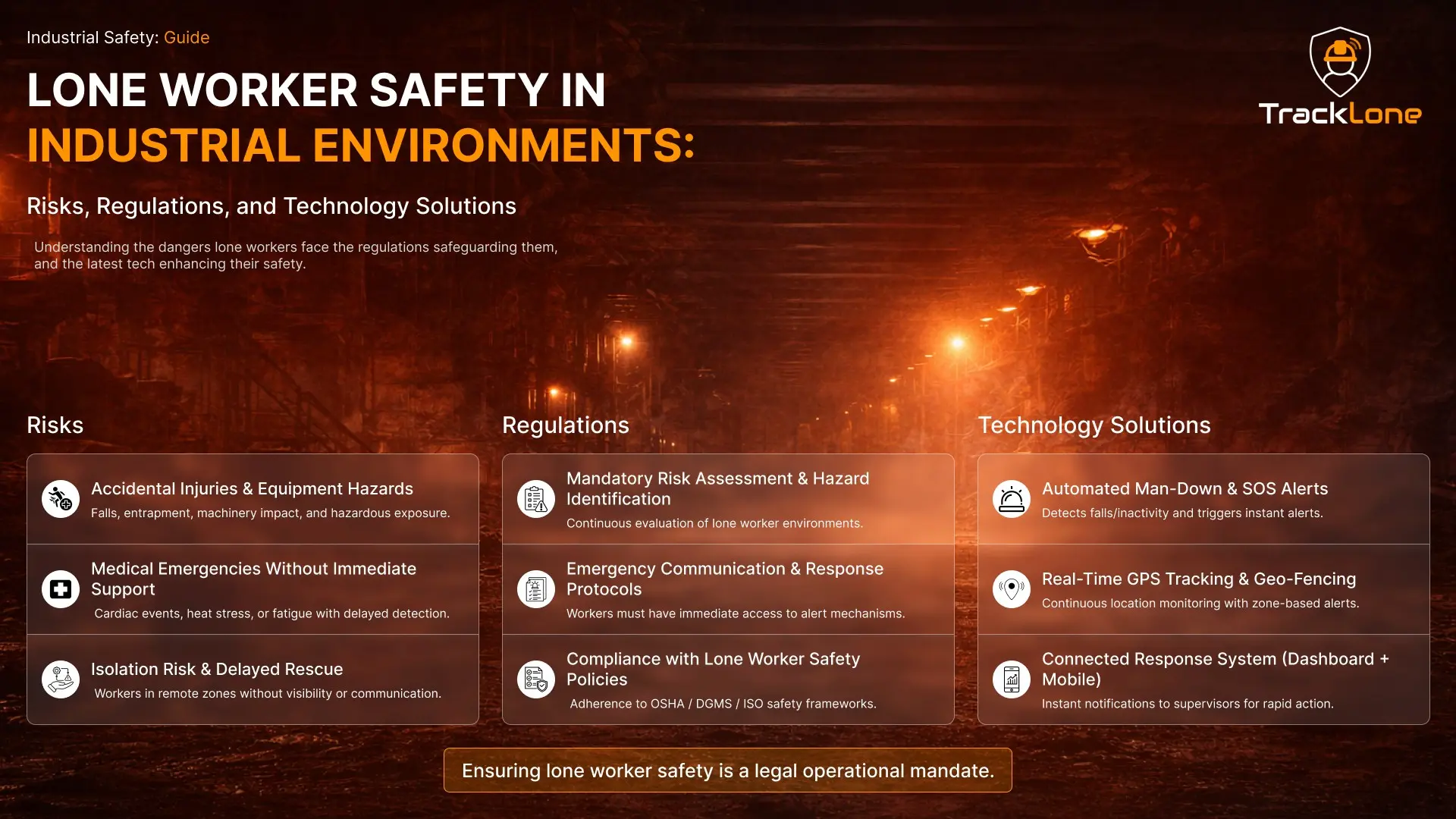
There is no single standalone law for lone worker safety, but global frameworks like HSE (UK) and OSHA clearly mandate that employers must identify, assess, and control risks before allowing anyone to work alone.
What businesses are legally required to do:
- Mandatory Risk Assessment: You must evaluate whether a task can be safely done alone. If not, lone working is prohibited for high-risk jobs like confined spaces or hazardous environments.
- Continuous Monitoring & Communication: Employers must ensure workers can raise alarms and stay connected, using phones, radios, or automated alert systems.
- Training Based on Risk Level: Lone workers require additional training to handle emergencies independently and make real-time decisions.
- Emergency Preparedness: Businesses must define response procedures, rescue plans, and first-aid access, especially for remote locations.
Failing to implement these controls increases legal liability, delayed response risks, and potential regulatory penalties, especially in high-risk industries.
Even with safety policies in place, many incidents still escalate, mainly because traditional methods fail when real-time action is needed.
Limitations of Traditional Lone Worker Safety Methods in Industrial Environments
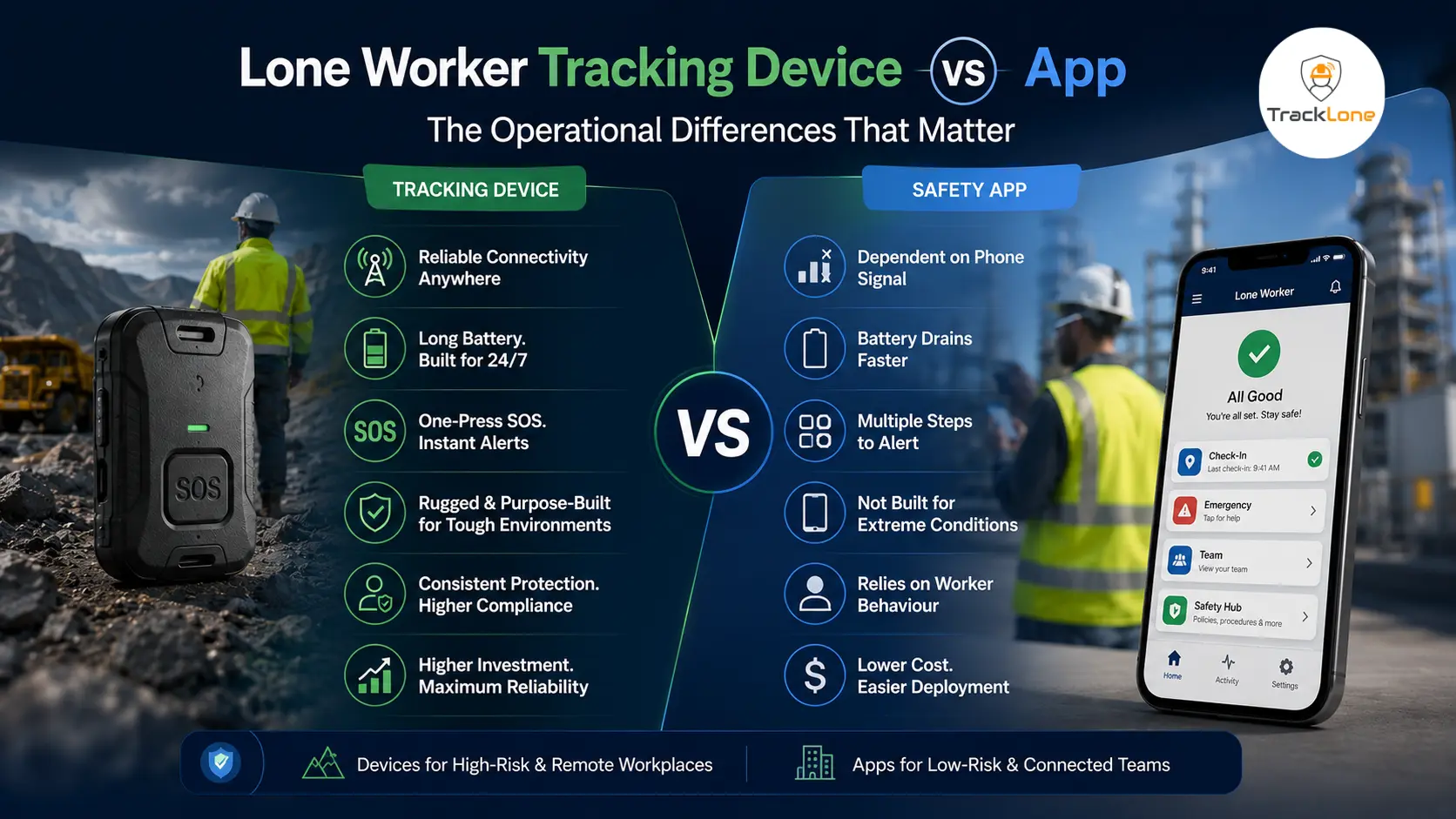
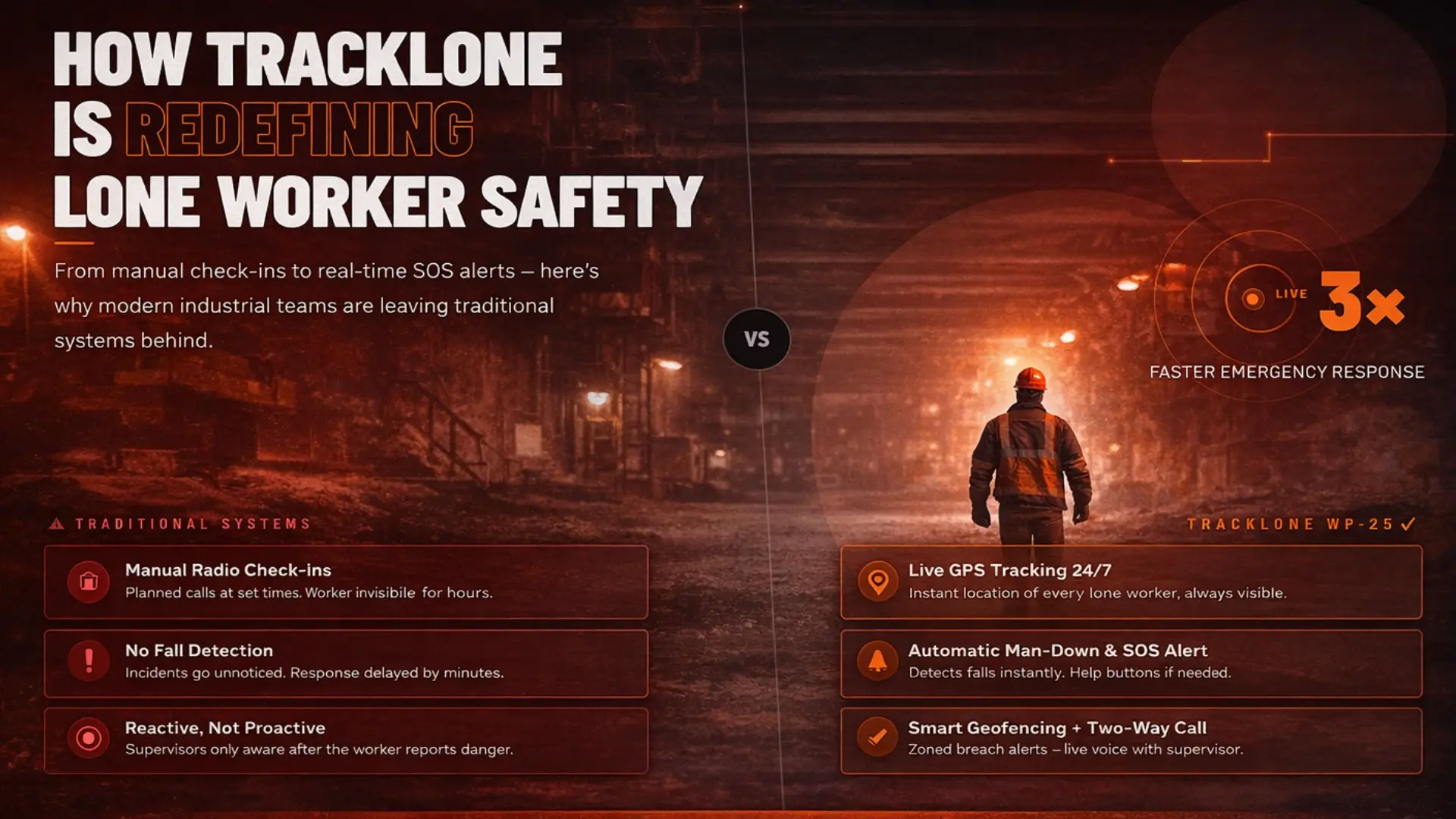
Manual check-ins and mobile phones create a false sense of safety because they depend heavily on worker action and network availability, both of which are unreliable during emergencies.
Where traditional methods fall short:
- Delayed Alerts: Scheduled check-ins (every 30–60 minutes) mean incidents can go unnoticed for critical time windows
- No Automatic Detection: Phones cannot detect falls, no-motion, or unconsciousness, leaving workers unable to call for help
- Network Dependency Issues: Remote industrial sites often have poor or no connectivity, making communication unreliable
- No Real-Time Visibility: Supervisors lack continuous location tracking or worker status updates
These gaps highlight why businesses are rapidly shifting toward IoT-based lone worker safety solutions with real-time monitoring and automated alerts.
How IoT-Based Lone Worker Safety Solutions Eliminate Monitoring Gaps
Manual check-ins and mobile phones fail because they rely on human action during emergencies, when a worker may be injured, unconscious, or unable to respond. This delay is where most incidents escalate.
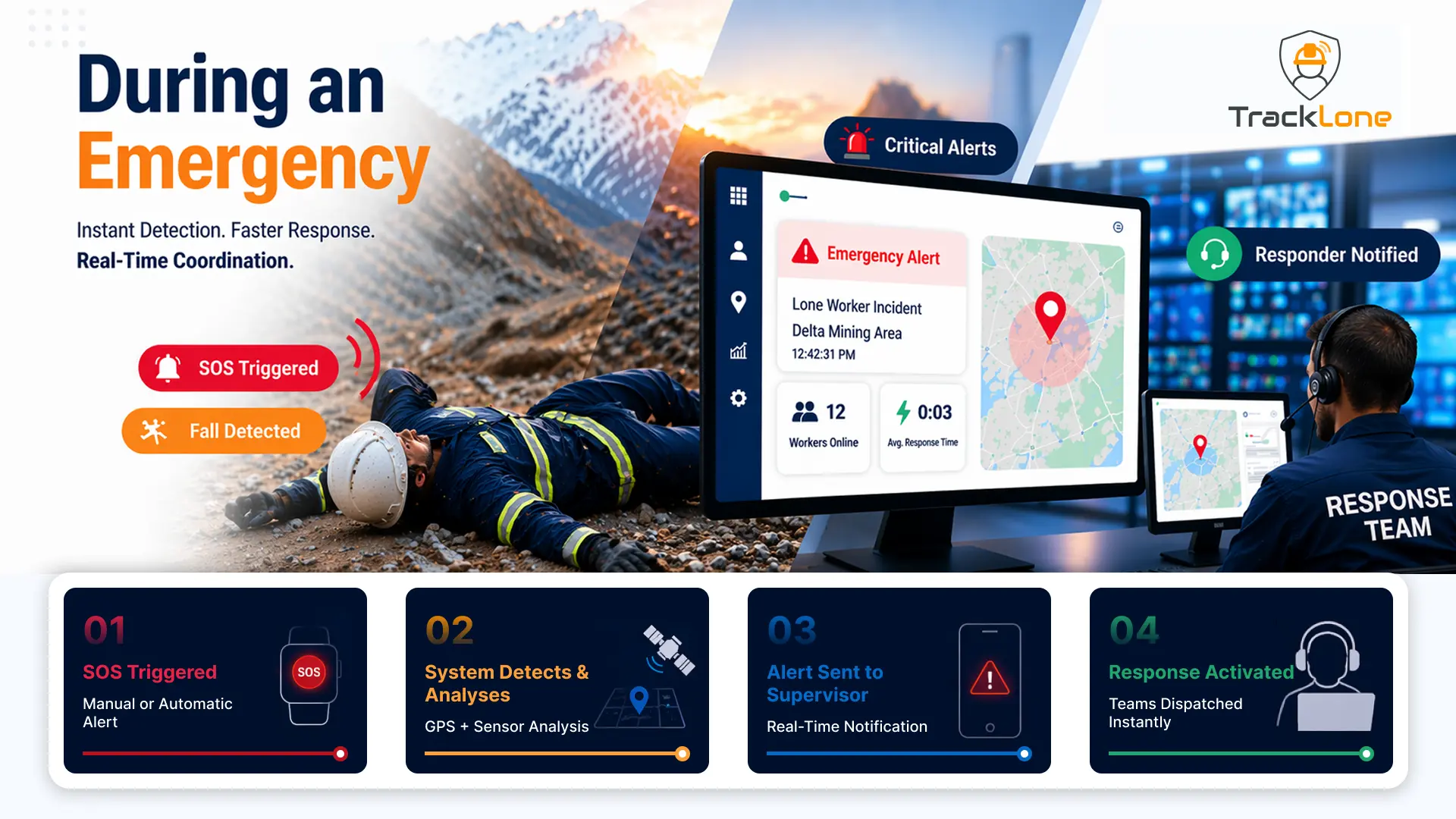
IoT-based lone worker safety solutions address this by shifting safety from manual reporting to continuous, automated monitoring. Instead of waiting for a worker to raise an alert, these systems operate in the background, capturing real-time data, analyzing worker activity, and enabling immediate response when something goes wrong.
Here’s how IoT technology closes the safety gap;
- Eliminates response delays by enabling instant incident detection and escalation
- Ensures continuous visibility across large or remote industrial sites
- Reduces dependency on human intervention during critical situations
- Enables faster, informed decision-making with real-time worker data
- Strengthens compliance through automated tracking and incident records
Now that you’ve seen how IoT transforms lone worker safety, let’s break down the core capabilities that make these systems effective on the ground.
Key Features of an IoT-Based Lone Worker Safety Solution
An IoT-based lone worker safety system is designed to minimize response time, ensure continuous monitoring, and improve safety compliance. These capabilities work together to create a connected safety environment where risks are identified early and addressed instantly.
1. Emergency Detection & Response
In high-risk environments, the ability to respond instantly can make a critical difference. IoT safety systems enable workers to trigger SOS alerts with real-time location sharing, ensuring immediate visibility for supervisors. At the same time, automated detection mechanisms like fall detection and no-motion alerts help identify incidents even when the worker is unable to respond, significantly reducing delays in emergency escalation.
2. Real-Time Monitoring & Location Intelligence
Continuous visibility is essential when workers operate across large or remote sites. With GPS-based live tracking, businesses can monitor worker movement in real time and access location history for better oversight. Additionally, geo-fencing capabilities help enforce safety boundaries by triggering alerts when workers enter or exit predefined zones, allowing proactive risk management in hazardous areas.
3. Communication & Workforce Accountability
Clear and reliable communication is a key part of lone worker safety. IoT solutions enable two-way calling, allowing supervisors to connect directly with workers during critical situations. Alongside this, check-in and check-out tracking ensures that workers have safely started and completed their tasks, helping businesses maintain accountability and verify compliance with safety protocols.
4. Centralized Monitoring & Safety Management
Managing lone worker safety across multiple locations requires a centralized approach. A multi-admin dashboard allows multiple stakeholders to monitor operations in real time, ensuring faster coordination during incidents. Features like device health monitoring ensure that lone worker safety devices remain functional, while historical logs provide detailed records of alerts, activities, and resolutions, supporting compliance, audits, and continuous safety improvements.
With the right capabilities in place, the real question is, what measurable impact does this have on your operations and workforce safety?
Business Benefits of Implementing an IoT Lone Worker Safety Solution
Implementing an IoT-based lone worker safety solution helps businesses move from reactive safety measures to proactive risk management. It not only improves worker protection but also strengthens operational control and compliance.
Here’s how these solutions deliver measurable value across industrial environments:
1. Faster Emergency Response & Reduced Incident Severity
IoT systems enable instant alert generation and real-time location sharing, which significantly reduces the time between incident occurrence and response. This faster intervention helps minimize injury severity, prevent escalation, and improve overall worker outcomes, especially in remote or high-risk zones.
2. Complete Workforce Visibility Across Sites
With continuous monitoring, businesses gain real-time visibility into worker location, movement, and activity status. This is particularly valuable for large facilities or distributed operations, where supervisors need a centralized view to ensure worker safety without being physically present.
3. Improved Compliance & Audit Readiness
Maintaining safety compliance becomes easier with automated data capture and incident logs. Businesses can track worker activity, monitor adherence to safety protocols, and generate reports for audits, reducing the administrative burden while strengthening regulatory compliance.
4. Reduced Operational Risks & Downtime
By detecting risks early and enabling proactive intervention, IoT solutions help prevent major incidents that could halt operations. This leads to fewer disruptions, improved productivity, and better continuity in industrial workflows.
Conclusion
Lone worker safety is no longer just a compliance requirement; it’s a critical business priority in today’s high-risk industrial environments. From delayed emergency response to limited visibility, traditional safety methods leave significant gaps that can impact both worker well-being and operational continuity.
By adopting IoT-based lone worker safety monitoring , you can move from reactive incident handling to real-time risk prevention, ensuring faster response, better monitoring, and stronger compliance across your operations.
Partner with TrackLone and get a custom IoT-powered lone worker safety solution tailored to your industry needs. From connected devices to centralized dashboards, TrackLone delivers end-to-end hardware and software solutions that help you improve safety, reduce risks, and drive operational efficiency.
Get in touch with TrackLone today to design a smarter, safer workplace.
FAQs
How does an lone worker safety solution work in real time?
It uses connected devices, sensors, and cloud platforms to continuously monitor worker activity and location, enabling instant alerts and faster response during emergencies.
Can IoT solutions work in remote or low-network industrial areas?
Yes, advanced IoT systems use multi-network connectivity (GPS, cellular, or offline data logging) to ensure continuous tracking and alert transmission even in low-connectivity zones.
How do lone worker safety solutions help during unresponsive or unconscious worker incidents?
IoT devices can automatically detect inactivity, falls, or abnormal motion and trigger alerts without requiring manual input from the worker.
What kind of data can businesses track using lone worker safety systems?
Businesses can track worker location, movement patterns, incident history, response times, and safety compliance data to improve decision-making and risk management.
How do IoT-based solutions support safety audits and compliance reporting?
They provide automated logs, incident records, and activity history, making it easier to generate reports, prove compliance, and identify areas for safety improvement.