Here’s the reality: Over 2.6 million people die annually from work-related causes, and thousands more face injuries every day. Now, think about this: studies show IoT-enabled connected worker safety systems can reduce workplace accidents by up to 40%. That’s not incremental improvement, that’s transformation.
So why should this matter to your business? Because safety isn’t just compliance—it directly impacts productivity, costs, and workforce trust. In this blog, you’ll explore how connected worker safety systems reduce workplace incidents through real-time monitoring, alerts, and faster response helping you move from reactive safety to proactive protection.
What is a Connected Worker Safety System?
A connected worker safety system is an IoT-enabled ecosystem that combines wearable devices, sensors, and cloud-based dashboards to monitor worker safety in real time.
Unlike traditional systems, which rely on manual reporting, an industrial worker safety system ensures continuous monitoring and instant alerts. It connects workers, supervisors, and safety managers through a centralised platform, creating complete visibility across operations. The system allows:
- Real-time tracking of worker location and activity
- Automated alerts during emergencies
- Data-driven insights for safety improvements
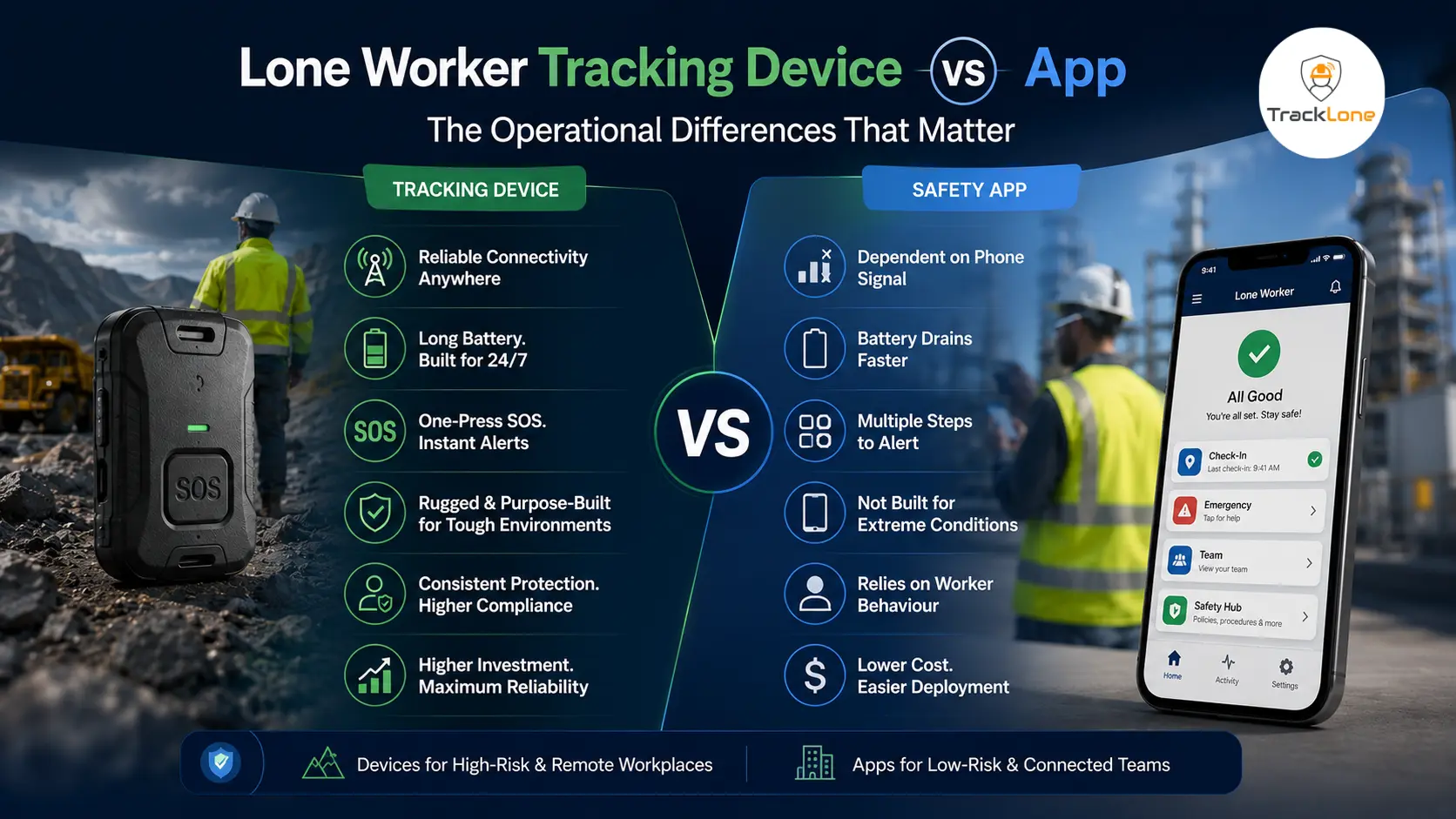
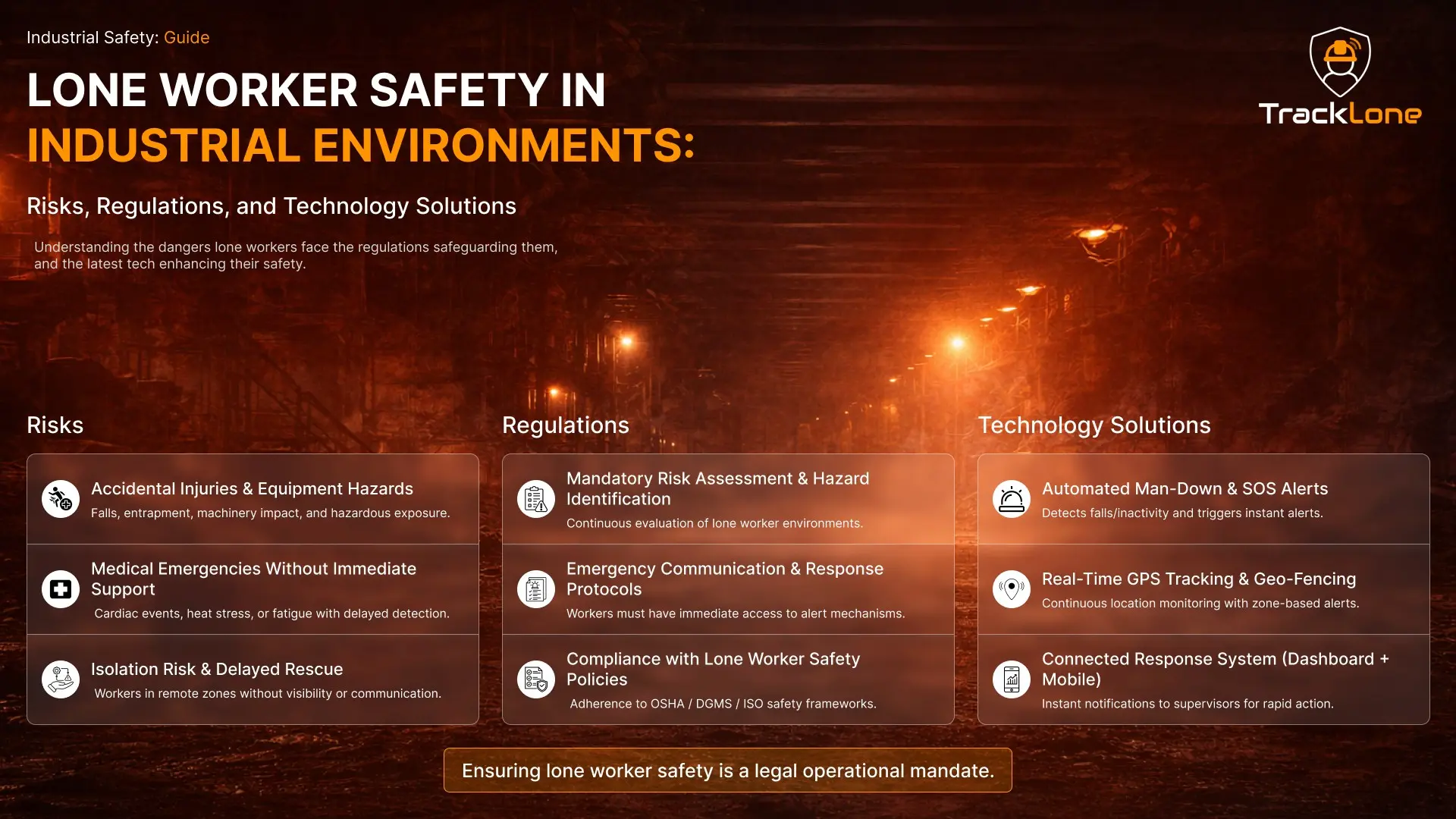
As you look closer at why incidents still occur despite strict protocols, one thing becomes clear, traditional safety systems are no longer enough on their own.
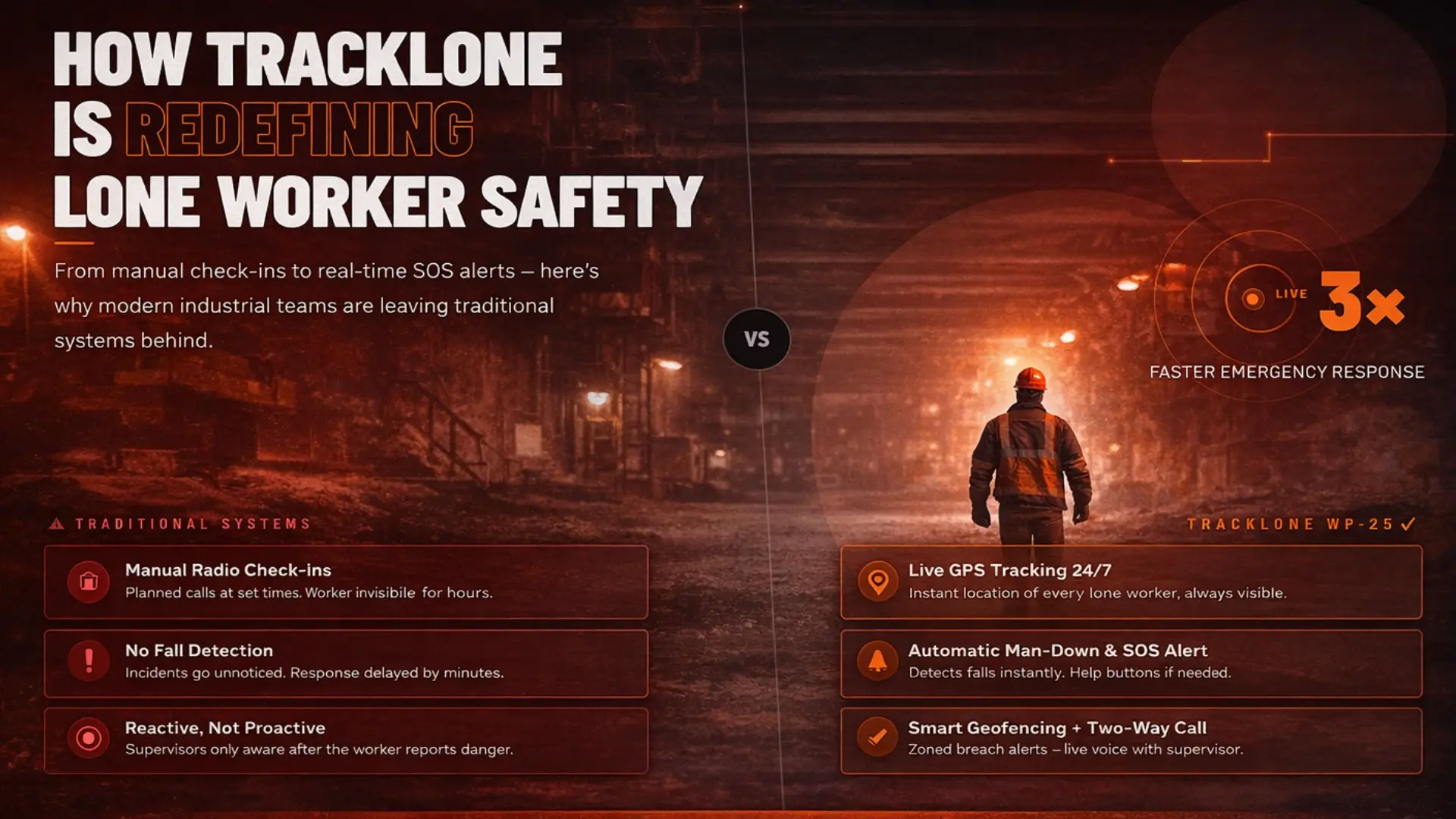
Now that you’ve seen how TrackLone works, let’s compare it directly with manual systems, because the difference becomes clear when you look at real-world performance.
Why Traditional Safety Methods Are Not Enough?
Most traditional safety systems were designed for compliance, not for real-time protection. They rely heavily on checklists, periodic audits, and manual reporting. While these are important for regulatory requirements, they fall short in preventing incidents in dynamic, high-risk environments.
Here’s where the gap becomes critical:
1. Incidents are reported after they occur
Traditional systems are reactive. By the time an incident is logged, the damage has already been done. There’s little to no opportunity for early intervention.
2. No real-time visibility into worker conditions
Supervisors often have limited insight into what’s happening on the ground, especially in large facilities or remote sites. Without continuous monitoring, risks like fatigue, unsafe movement, or environmental hazards go unnoticed.
3. Delays in emergency response
In many cases, workers must manually report an issue or rely on someone noticing it. In situations like falls, unconsciousness, or isolated work zones, this delay can significantly increase the severity of injuries.
4. High dependency on human intervention
Traditional safety depends on workers consistently following protocols, reporting hazards, and communicating issues. But in real-world conditions, stress, fatigue, or emergencies, this dependency becomes a major vulnerability.
5. Limited data for prevention and improvement
Manual systems generate fragmented or incomplete data, making it difficult to identify patterns or predict future risks. This restricts organisations from moving beyond compliance to true prevention.
In high-risk industries, even a few minutes of delay can escalate a minor issue into a serious incident.
This is why relying solely on traditional methods is no longer sustainable.
How Connected Safety Reduces Workplace Incidents
Connected systems shift safety from reactive to proactive, and increasingly, predictive. Instead of responding after an incident occurs, these systems continuously monitor conditions, detect risks early, and trigger immediate action to prevent escalation.
Reduced accidents + faster emergency response + compliance visibility
Here’s how they make a measurable difference:
1. Real-Time Monitoring and Alerts
With real-time worker safety monitoring, organisations gain continuous visibility into worker activity, movement, and environmental conditions. Whether it’s detecting prolonged inactivity, unsafe zones, or unusual patterns, the system flags risks instantly, allowing supervisors to intervene before a situation becomes critical. This level of visibility is especially important in large or remote industrial environments where manual oversight is limited.
2. Instant Emergency Response
In emergency situations, response time is everything. Features like SOS alerts and a man down alert system ensure that when something goes wrong, such as a fall, collapse, or medical issue, alerts are triggered immediately along with real-time location data. This eliminates dependency on manual reporting and significantly reduces the time it takes to reach and assist the worker.
3. Automated Fall Detection
A worker fall detection system uses motion sensors and impact analysis to automatically detect sudden falls or abnormal movement. In high-risk industries like construction, mining, and oil & gas, where falls are among the leading causes of serious injuries, this feature ensures that even if a worker is unconscious or unable to respond, help is dispatched without delay.
4. Continuous Behaviour and Risk Analysis
Connected systems don’t just respond—they learn. Data collected from devices over time helps identify unsafe patterns such as frequent entry into restricted zones, irregular movement, or prolonged inactivity. These insights enable organisations to address root causes, improve training, and redesign workflows to minimise risk exposure.
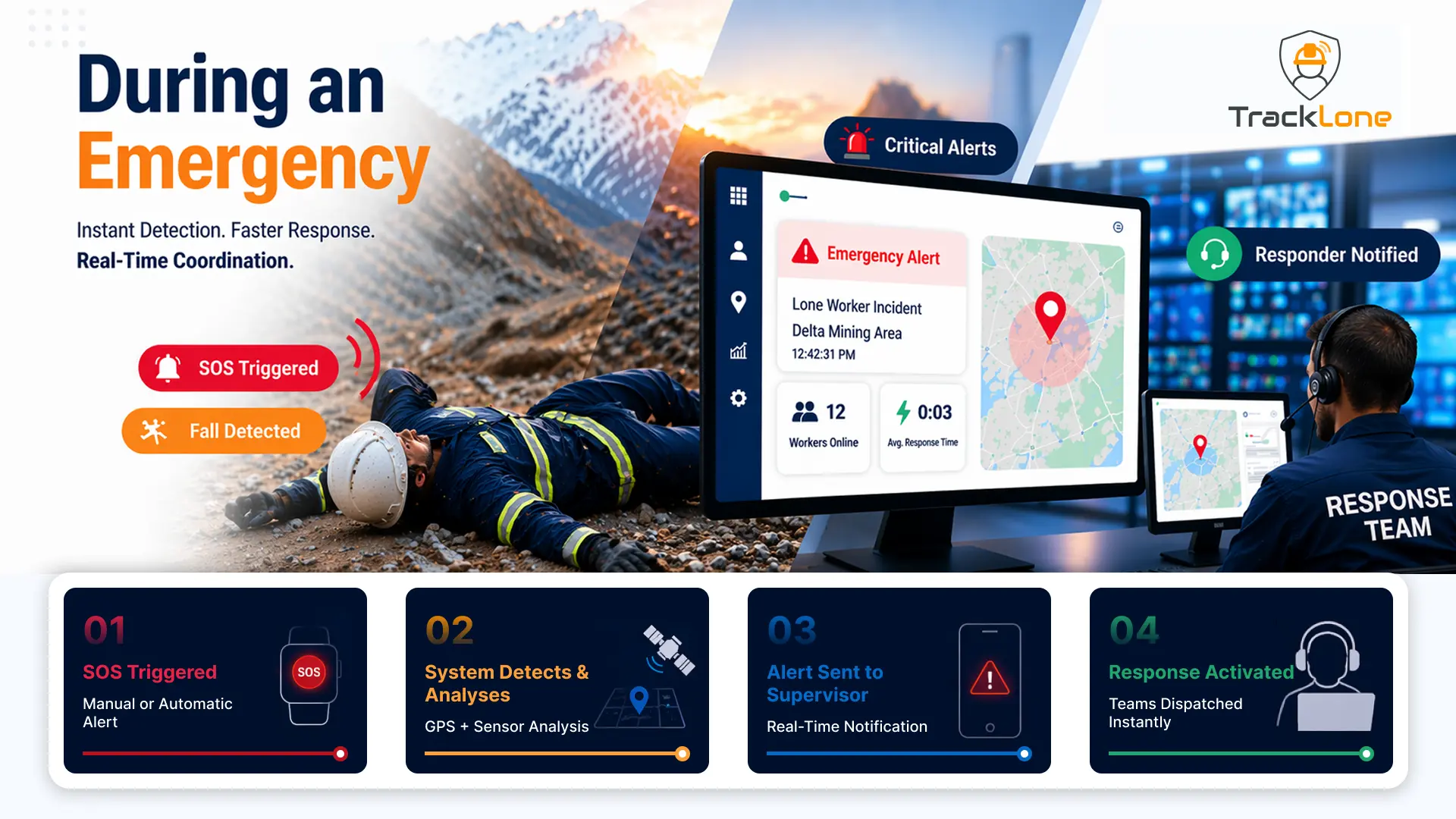
5. Structured Response Workflow
Modern connected safety platforms follow a clear and effective response framework:
Alert → Connect → Assess → Protect
- Alert: The system detects a risk or emergency
- Connect: Immediate communication is established with the worker
- Assess: Supervisors analyse real-time data and the situation context
- Protect: Appropriate action is taken, dispatch help, escalate, or intervene
This structured workflow ensures faster decision-making, reduces confusion during emergencies, and enables coordinated action across teams.
As you move from understanding how connected safety works to what powers it, it becomes clear that the impact comes from a combination of simple yet intelligent technologies working together.
“One prevented incident can pay for the system.”
Key Technologies Behind Connected Worker Safety
Connected worker safety systems are built on a set of technologies that continuously monitor, detect, and respond to risks in real time. While the underlying tech is advanced, its purpose is simple, make safety proactive, not reactive.
Here’s a breakdown of the core technologies and how they directly improve worker protection:
1. Wearable IoT Devices
Smart wearables such as badges, helmets, and compact trackers are at the centre of connected safety. These devices are worn by workers throughout their shift and continuously capture movement, location, and activity data.
It ensures constant visibility and protection, especially for workers operating in isolated or high-risk environments.
2. Fall Detection & Impact Sensors
These sensors use motion patterns and impact thresholds to automatically detect falls or sudden shocks. The system can differentiate between normal movement and a potential accident.
This triggers instant alerts even if the worker is unconscious or unable to call for help, reducing response time significantly.
3. SOS & Emergency Communication
With a single press, workers can send emergency alerts directly to supervisors. Many systems also enable two-way communication for real-time coordination.
It allows immediate escalation and faster decision-making during critical situations.
4. GPS & Location Tracking
Real-time GPS tracking provides accurate worker location along with route history over a defined period. This is particularly valuable for mobile or remote workers.
Allows quick identification and access to workers during emergencies, improving rescue efficiency.
5. Geo-Fencing & Zone Alerts
Geo-fencing creates virtual boundaries around hazardous or restricted zones. The system automatically sends alerts when a worker enters or exits these areas.
It prevents unauthorised access and helps enforce safety protocols without manual supervision.
6. Cloud Dashboards & Analytics
All data collected from devices is processed and displayed on a centralised dashboard accessible to multiple stakeholders. It includes real-time alerts, historical logs, and incident reports.
This provides complete situational awareness and supports data-driven safety decisions, audits, and compliance.
IoT systems collect large-scale, continuous safety data, enabling organisations to identify recurring hazards, detect patterns, and proactively improve workplace safety strategies over time.
Benefits of Real-Time Worker Safety Monitoring
When safety becomes continuous and data-driven, the impact extends far beyond incident prevention. Real-time monitoring gives organisations the visibility and control needed to act faster, reduce risks, and optimise operations.
Here’s how it delivers measurable value across safety and business performance:
- Faster response times with immediate alerts, reducing the gap between incident and action
- Reduced workplace incidents through proactive monitoring and early risk detection
- Improved compliance with automated logs, audit trails, and incident reporting
- Higher productivity as safer workers operate with greater confidence and fewer disruptions
- Data-driven decision making using historical insights to identify patterns and prevent recurring risks
As you move from understanding the benefits to real-world application, the next question is clear, where do connected safety systems create the most impact?
Use Cases of Connected Safety in Industrial Environments
Connected worker safety systems are designed for high-risk, high-movement environments where real-time visibility is critical. From isolated worksites to large-scale industrial operations, these systems ensure continuous protection, faster response, and reduced incident risks.
Here’s how they are applied across key industries:
Mining
Mining operations often take place deep underground or in remote open-pit locations where communication is limited and risks are high. In such environments, even a minor delay in response can become life-threatening. Safety devices for Mining workers provide:
- Real-time tracking of workers in underground or isolated zones
- Instant alerts in case of falls, collapses, or no-motion scenarios
- Continuous monitoring where manual supervision is not feasible
Manufacturing
Manufacturing facilities are large, fast-paced, and filled with heavy machinery making them prone to operational hazards. Workers may operate in isolated sections of the plant, increasing the risk of unnoticed incidents. Manufacturing workers safety system provides :
- Monitoring worker movement across factory floors and production lines
- Reducing machine-related incidents through real-time alerts
- Ensuring adherence to safety protocols in restricted or high-risk zones.
Construction
Construction sites are dynamic by nature, with constantly changing layouts, multiple teams, and high-risk activities such as working at heights. These factors make consistent safety monitoring challenging. Construction workers safety solution enable:
- Real-time visibility across large and multi-level sites
- Detection of fall risks, sudden impacts, and unsafe movement
- Improved coordination between supervisors and on-ground workers.
Oil & Gas
Oil and gas operations involve hazardous environments, including offshore rigs, refineries, and remote inspection sites. Workers are often exposed to risks such as gas leaks, explosions, and extreme conditions. Connected systems support safety by:
- Monitoring workers in high-risk and restricted zones
- Enabling instant alerts and communication during emergencies
- Providing real-time location data for faster response in remote areas.
FMCG & Warehousing
Warehouses and FMCG operations involve large spaces, constant movement of goods, and heavy equipment like forklifts. Workers may operate alone or during off-hours, increasing vulnerability. Warehouse worker safety solution help by:
- Tracking worker movement across warehouses and distribution centres
- Preventing accidents in high-traffic or equipment-heavy zones
- Ensuring worker safety during night shifts or isolated tasks
Facility & Security Workforce
Security personnel and facility staff frequently work alone, especially during night shifts or across large premises. Their roles involve constant movement and exposure to unpredictable situations. Connected systems for security personnels enhance safety by:
- Monitoring guards and staff across campuses, plants, and buildings
- Enabling instant SOS alerts in case of threats or emergencies
- Providing supervisors with real-time visibility and communication
TrackLone delivers connected safety across all these industries, request a demo to see it in action.
As you move from understanding the impact to actual deployment, the next step is making implementation simple and structured.
How to Implement a Connected Safety System in Your Workplace?
A connected safety system doesn’t require complex transformation, just a clear, step-by-step approach focused on risk, visibility, and adoption.
Step 1: Identify High-Risk Roles & Environments
Start by mapping lone workers, hazardous zones, and high-risk tasks where incidents are most likely to occur.
Step 2: Choose the Right IoT Devices
Select lone worker safety device based on your environment, whether it’s wearables for field workers or trackers for large facilities.
Step 3: Integrate with a Central Dashboard
Set up a real-time monitoring dashboard to track workers, receive alerts, and manage incidents centrally.
Step 4: Train Workforce & Supervisors
Ensure teams understand how to use devices and respond to alerts, adoption is key to effectiveness.
Step 5: Monitor, Analyse, and Optimise
Continuously use data insights to refine safety protocols and reduce risks over time.
A structured implementation like this ensures your safety system evolves from basic monitoring to a proactive, continuously improving protection framework.
Summing Up
Workplace safety is no longer just about compliance, it’s about real-time awareness and rapid response. Connected worker safety systems enable organisations to move from delayed reporting to proactive prevention by combining continuous monitoring, instant alerts, and data-driven insights.
The result is fewer incidents, faster interventions, and a safer, more efficient workforce across high-risk environments.
TrackLone is an IoT-based lone worker safety solution designed to simplify this entire process, from device deployment to real-time monitoring and incident response.
See how TrackLone can protect your workforce in real time. Request a demo today!
FAQs
What is a connected worker safety system?
A connected worker safety system uses IoT devices, wearables, and cloud-based dashboards to monitor workers in real time. It tracks location, detects risks, and sends instant alerts, helping organisations improve visibility, response time, and overall workplace safety.
How does connected safety reduce accidents?
Connected safety reduces accidents by enabling real-time monitoring, early risk detection, and instant alerts. Automated features like fall detection and SOS notifications ensure faster response, while data insights help identify patterns and prevent recurring incidents before they happen.
What technology is used in worker safety systems?
Worker safety systems use IoT wearables, GPS tracking, fall detection sensors, geo-fencing, and cloud-based dashboards. These technologies work together to monitor worker activity, detect hazards, enable communication, and provide actionable data for improving safety and compliance.
How to improve workplace safety using IoT?
IoT improves workplace safety by providing real-time visibility into worker conditions, automating alerts during emergencies, and analysing data to identify risks. This helps organisations move from reactive safety measures to proactive prevention and faster incident response.